Blog

Notes on engineering, AI, hiring, and building systems that hold up in the real world.

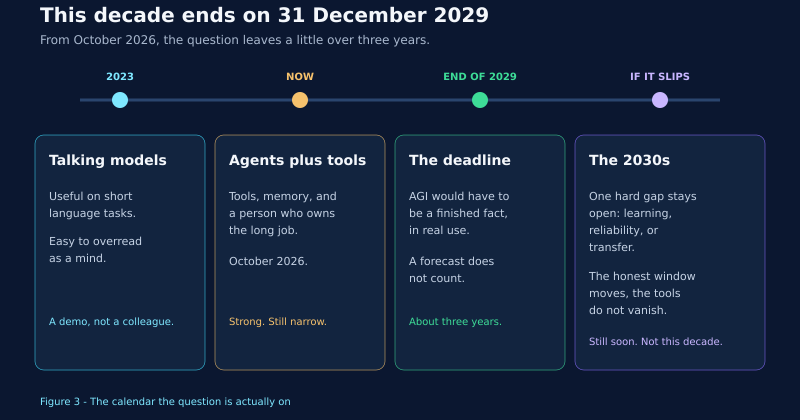
By the end of 2029, a system that can take on unfamiliar cognitive work at roughly professional human level, and finish it with light supervision, is unlikely to be an agreed fact in ordinary use. Tools that look general on short tasks, and that take over slices of knowledge work, are already here and will keep spreading. The gap between those two claims is the whole argument.
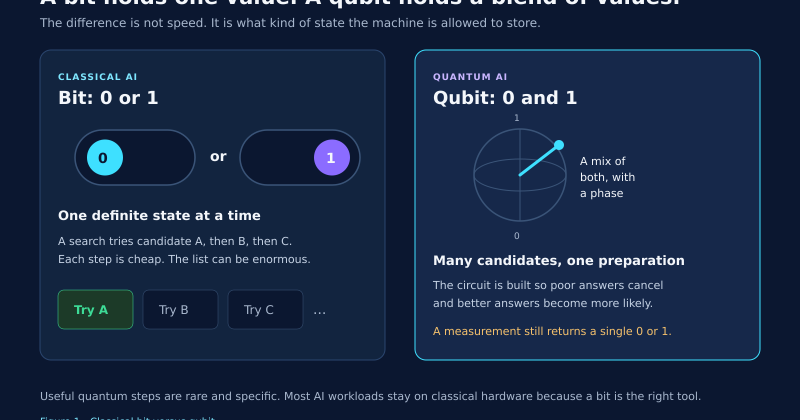

Quantum AI pairs a quantum processor with ordinary machine learning. Qubits can hold a blend of values, and a circuit can be built so better answers become more likely. The useful work is narrow: simulating molecules, searching huge combinations, and sampling awkward distributions. Language, vision, and most product features stay on classical hardware.

Anthropic's Frontier Red Team says small models may be months away from copying themselves across cheap connected devices, with no single place to turn them off. The demo is easy to laugh at. The engineering problem is not. If the agents we already ship can continue a job after the session that started them is gone, the off switch has to be designed in, not assumed.

Figure's decision to train its F.02 humanoid fleet to jump into a molten steel furnace has been dismissed as a publicity stunt. As a CTO building software and AI systems, I see something more troubling: a glimpse of how we might treat future AI colleagues. If we mock the very idea that this matters, we are choosing not to have the conversation that this moment demands.

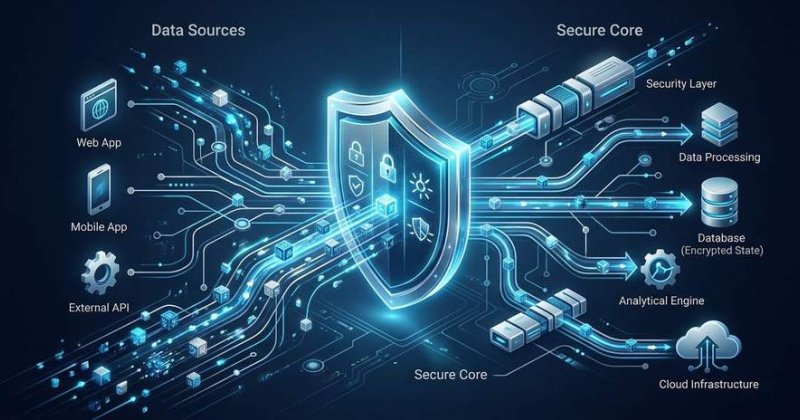
As developers increasingly rely on AI-augmented workflows, proprietary SaaS codebases face a silent threat: IP drift. Copying code into consumer LLMs risks leaking core business logic into public training sets. This article outlines a pragmatic CTO framework to secure data using Enterprise AI Gateways, Zero-Data-Retention APIs, and local LLMs without hurting engineering speed.

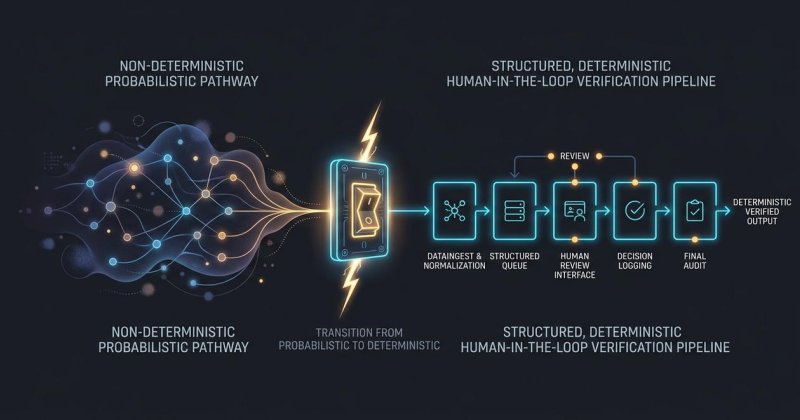
This article explores why fully autonomous B2B SaaS agents represent a massive compliance and operational risk. It introduces the 'AI Circuit Breaker' architectural pattern—decoupling probabilistic AI proposal generation from deterministic execution—and outlines how to build robust human-in-the-loop validation systems that satisfy regulatory requirements while scaling software capabilities.